
By going through the ancient ayurvedic works it is possible to consider 3 schools of Ayurveda which prevailed in ancient times, viz a) Athreya sampradaya (school of medicine) ,b) Dhanwantari or Sushruta sampradaya (school of surgery),and c) Kashyapa sampradaya (school of paediatrics and obstetrics).
As mentioned earlier, Lord Brahma the propounder of Ayurveda imparted this science to Prajapati who in turn taught the same to Ashwins, the celestial twin physicians, they in turn taught Ayurveda to Indra. Up to this stage the lineage is common to all the 3 schools of Ayurveda. Thereafter, according to Athreya school sage Bharadwaja learns Ayurveda from Indra and imparts to sage Athreya who in turn teaches his disciples viz Agnivesh, Bhela, Hareeta, Jatukarna, Parashara, Ksharapani and others who wrote their individual treatises on Internal Medicine.
In case of Dhanwantari school, Dhanwantari or Divodasa learn Ayurveda from Indra and taught the same to his students viz, Sushruta, Aupadhenava, Vaitarana, Aurabhra, Paushkalavata, Karaveerya, Gopurarakshita, Bhoja and others who later wrote their individual treatises on Surgery. In case of Kashyapa school, sage Kashyapa, Vasista, Atri, Bhrugu, their sons and disciples learnt Ayurveda from Indra and wrote their treaties on Kaumarabhrithya/(Pediatrics & Obstetrics).
Ayurveda is also called Astagaayurveda, with 8 divisions, viz, 1) Kaya (study and management of disorders related to digestion and metabolism), 2) Kaumarabhrithya (Pediatrics & Obstetrics) 3) Bhootavidya (study and management of disorders arising from super human influences like constellation changes, evil spirits, etc) 4) Shalakya (study and management of ENT and Eye diseases), 5) Shalya chikitsa (Surgery), 6) Agad Tantra (Toxicology including study and management of sting/bites, etc) 7) Rasayanatantra (Rejuvenation therapy/ Geriatrics& Gerontology) and 8) Vajeekaranatantra (study and management of disorders relating to reproduction and is related to promotion of virility).
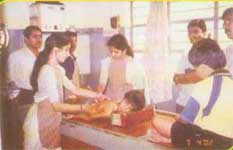
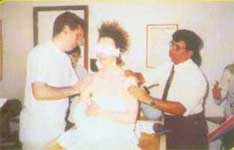
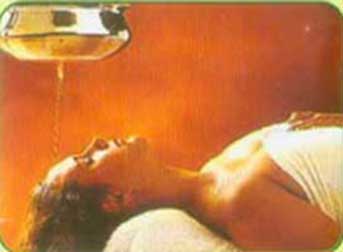
Ayurveda has developed magnificent treatments for renewing body (chemistry) and mind (Consciousness). When the mind is deeply centred and settled, the body will naturally heal faster and age slower. Many of the treatments involve use of therapeutic oils and decoctions that have rare and precious herbs that have been prepared in specific combinations to have a profoundly healing effect.
Ayurvedic treatment programs at Sanjivani Wellness centre are backed by clinical experience of Dr Mukesh Jain spanning over 30 years. The evidence based clinical agenda are simple treatment and enhance your body immunity against Arthritis , Sciatica , Blood Pressure , Diabetes , Thyroid , Migraine , Parkinson’s , Obesity , Neuro-muscular Pain , Skin Problems and to prevent Cancer and HIV infection. Dr Jain uses scientifically verified ayurvedic ingredients in his treatment programs.


Recent Comments